

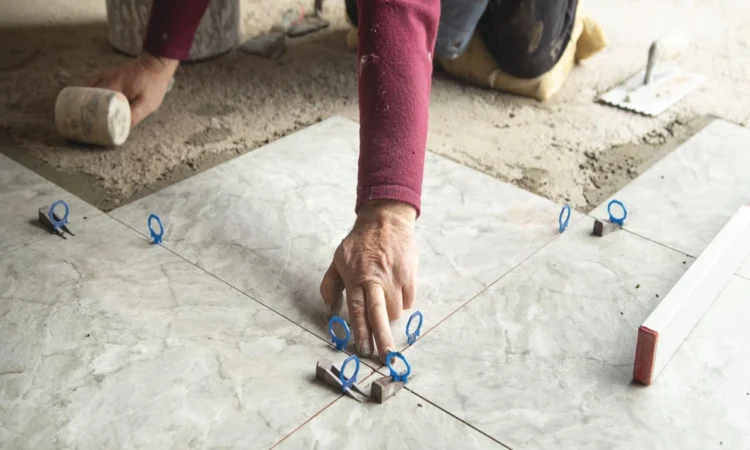
Contractors and renovators should not treat every tiled area as having the same grouting requirements. Joint dimensions, tile characteristics and surrounding conditions can affect which tile grout suits an installation and how the finished joints perform.
Before ordering from a building materials supplier, project teams should examine the tiled area and identify the demands that the grout will face. These seven conditions provide a practical basis for narrowing the specification before application begins.
1. How Wide and Deep Are the Tile Joints?
Joint dimensions provide an important starting point because grout products can have recommended application ranges. Narrow joints may require different handling characteristics from wider gaps that need a greater volume of material.
Contractors should measure several joints rather than assuming that spacing remains identical throughout the installation. Tile dimensions, substrate variations and workmanship can create small differences across the surface.
The selected tile grout should suit the actual joint width and depth according to the manufacturer’s instructions. Matching the product to the joint dimensions can also make placement and finishing more manageable.
2. What Type of Tile Surrounds the Joint?
Tile material can affect grout selection and application technique. Ceramic, porcelain, natural stone and other finishes differ in surface texture, porosity and sensitivity to staining or scratching.
Highly textured surfaces may hold grout residue more readily, while some porous materials can require additional preparation before grouting. Contractors should check whether the chosen product suits the tile and whether testing on a small area is appropriate.
A building materials supplier can provide technical information, but project teams should confirm compatibility against the product documentation and the tile manufacturer’s requirements.
What to Compare Before Selecting Grout
Review these points alongside the grout specification:
- recommended minimum and maximum joint widths;
- compatibility with the installed tile material;
- suitability for internal, external, wet or dry locations;
- expected movement or vibration in the tiled area;
- resistance requirements for staining, moisture or regular cleaning;
- available colours and their relationship with the tile finish.
Comparing these conditions together helps prevent one visual or technical preference from determining the specification on its own.
3. Will the Tiled Area Experience Regular Moisture?
A dry internal wall faces different conditions from a shower, washroom, balcony or other area that encounters frequent moisture. Contractors should establish how regularly water will reach the joints and how the complete tiled system manages that exposure.
Grout forms only one part of a tiled installation. Waterproofing, drainage, substrates, adhesives and movement provisions also affect performance in wet environments.
Selecting tile grout should therefore form part of a broader system decision rather than serve as a substitute for appropriate waterproofing or substrate preparation.
4. Does the Surface Experience Movement or Vibration?
Tiled areas can experience movement from temperature changes, substrate behaviour, structural conditions or everyday use. Floors may also face vibration or repeated loading depending on the building and location.
Project teams should identify movement joints and follow the relevant specification rather than filling every gap with standard grout. Movement joints generally require materials designed to accommodate movement.
Contractors should also consider whether environmental changes could place additional stress on ordinary tile joints, especially in exposed or frequently changing conditions.
5. How Much Traffic and Cleaning Will the Area Receive?
A decorative wall and a heavily used floor do not face equal service demands. Entrances, commercial spaces and other high-traffic areas may require grout that can withstand more regular wear and cleaning.
Cleaning practices also matter. Project teams should consider how frequently staff will clean the surface and what cleaning products the facility expects to use.
Before choosing from a building materials supplier, contractors can compare durability and maintenance requirements against the actual use of the area rather than selecting primarily according to appearance.
6. What Finish and Colour Does the Project Require?
Grout colour influences how clearly the joint pattern appears within the finished surface. A close match can create a more continuous appearance, while a contrasting shade can make individual tiles and joint lines more prominent.
However, appearance should not override practical considerations. Light and dark colours may show staining, residue or variations differently depending on the installation and maintenance routine.
Contractors should review physical samples where possible because lighting, tile colour and surface texture can influence how the finished grout appears.
7. What Are the Application Conditions on Site?
Temperature, ventilation, substrate condition and working time can affect how contractors mix, place and finish grout. Teams should review the manufacturer’s application limits before starting work.
The site should also support consistent mixing ratios and appropriate cleaning procedures. Adding excessive water or changing the specified mix can affect the finished result.
Where contractors need to grout large areas, they should plan manageable sections so the application and cleaning process remains controlled throughout the working period.
Finalise the Specification From the Joint Outwards
The grout selection should follow the conditions of the tiled surface rather than a standard specification applied across every location. Joint dimensions, exposure, traffic and finish requirements provide more useful criteria for choosing the appropriate material.
Contact Ardex – Quicseal Singapore to discuss your tile joint conditions and compare grout options suited to the installation, exposure requirements and intended finish.

