

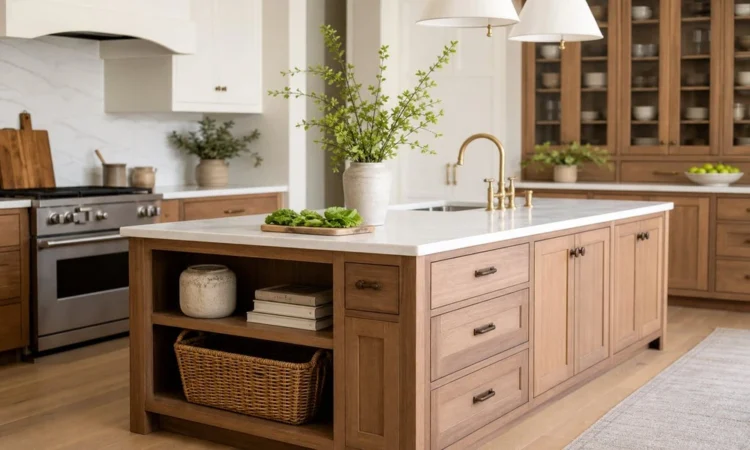

Kitchen island cabinetry
Kitchen islands tend to be the most utilized part of the kitchen, but their cabinets determine if they live up to that claim. A well-designed island will provide storage, increase prep space, conceal everyday messes and simplify the flow of your kitchen. An island that isn’t properly designed will obstruct walkways, cause difficulties in appliance usage, and offer insufficient storage solutions.
Before selecting door and finish types, consider how you’ll be using the kitchen throughout the day. Cooking, serving, homework, cleaning up and dining all affect how the base cabinetry performs.
What Should the Island Do?
Not all islands are created equal. In a smaller kitchen, the island might serve as your primary storage. But in a larger kitchen, an island focused on cooking or entertaining might be preferable. Giving your island a primary focus keeps it from feeling like a hodgepodge of cabinet boxes.
What is the island’s primary purpose?
- Storing pots and pans
- Creating a prep area
- Hiding small appliances
- Providing seating
- Housing a cooktop or sink
- Housing recycling, garbage and cleaning supplies
Once you know the primary function, you can add in secondary purposes without compromising useful storage. A prep island could have big wide drawers right next to the counter, whereas a hosting island might need storage that opens away from seated guests.
Preserve Clear Working Areas
The placement of the island cabinets needs to account for the flow of the room, not just how much space is available. Cabinets, drawers, appliance handles and guests will all require room to operate without causing bottlenecks.
Most layouts need at least 42 inches between the island and any adjacent cabinets or appliances – Forbes.com article. This allows someone to open a cabinet while another person walks by. If there are multiple cooks, there might need to be more room around the oven, refrigerator and dishwasher.
Your island should be in close proximity to the rest of the kitchen. If it blocks the path from the refrigerator to the sink, or requires walking around a large cabinet box, then it’s going to be visually appealing, but inconvenient.
Plan Storage Based on Usage
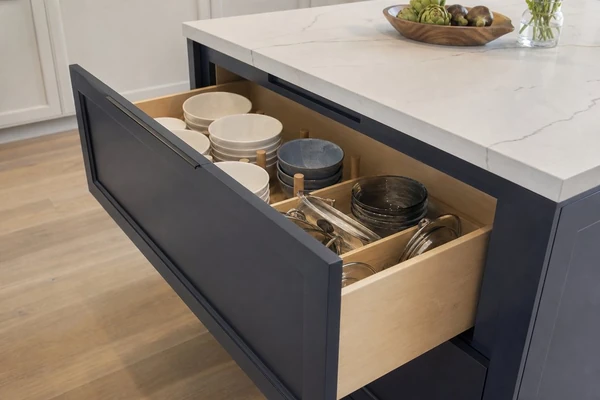
Kitchen cabinet storage
Shelving units can be bulky to access, whereas drawers give easy access to what’s inside. For local context, the team at Kitchen Remodeler Davie, a kitchen remodeling company based in Davie, Florida, covers kitchen island cabinetry Davie as one practical route. Deep drawers mean less bending over and crawling into the back of dark cabinets. They’re great for storing mixing bowls, storage containers, pans and heavy utensils.
Consider what will be stored in each cabinet before settling on a design. An oil or spice pullout might make sense next to a cooking surface, but a pullout that’s too wide might be better suited for serving pieces or small appliances. Don’t cram every square inch with doors and drawers. Open knee space might be required if you plan on seating at the island. End panels, display shelving that’s only a few inches deep, or even a furniture-style finish on the back of the island might give the look of intentionality if it’s visible from another room.
Watch the Back Side
The back side is sometimes forgotten. But it can be a key design element, especially if it faces into a living or dining room. The cabinetry on the back should be designed just as thoughtfully as the working side. This might mean a combination of closed cabinets for less frequently used items, open shelving for cookbooks and serving ware, or a finished panel that allows for stool seating. If seating is included, make sure the storage doesn’t impinge on legroom. This area is also perfect for concealing table linens, seasonal serving pieces, and other items that don’t need to be easily accessible during cooking time.
Build for Use, Not Just Show
The island sees a lot of use throughout the day. Hands, chairs, grocery bags, and pots all rub up against it. The cabinet finishes should be able to handle regular cleaning, and the drawer hardware should be strong enough to handle the weight of everyday use. Door style isn’t just about looks, it’s also about maintenance.
Detailed molding can create a traditional feel, but it may attract more dirt and grease than a simple flat or shaker style. Using a different cabinet color to set the island apart can work, but it should still feel cohesive with the rest of the cabinetry, countertops, flooring, and adjacent furniture. Finally, consider the hardware. Pulls and knobs should be easy to reach and comfortable to grasp.
Address Utilities Early
If your island is going to have a sink, cooktop, dishwasher, or electrical outlets, those needs should be addressed before you begin designing the cabinetry. Plumbing, ventilation, electrical wiring, and structural support will all affect what cabinets you choose and how much storage is possible inside them. A sink base, for example, can’t accommodate the same drawer configuration as a standard cabinet. And a cooktop might have to accommodate a ventilation hood, which CNET covers at cnet.com/home, or other equipment underneath. Work out these details before ordering the cabinetry to avoid potential issues later.
It’s amazing how much more usable a cabinet can become when you organize the interior with adjustable drawer dividers to stop pots and pans from nesting together, a tray cabinet for cutting boards and sheet pans, or soft-close drawer slides and hinges if you have young kids. You might not think about them at first, but those little things will make a big difference down the road.
Consider adding a recessed toe-kick on the working side so you can get closer to the countertop when preparing food or washing dishes.
Consider installing a sturdy base molding that will resist scuffing from shoes, mopping, and vacuums as the years go by.
Design Around Daily Use
The best island cabinetry is based on actual daily use, not just a show kitchen. Think about how groceries get unloaded in the kitchen, where food is prepared, how dishes get stacked, and how traffic flows through the space when multiple tasks are occurring. Make a list of cookware, appliances, and serving pieces that need a home before committing to a cabinet layout.