Conservatory Roof Condensation: Why It Happens and How Homeowners Can Tackle It

https://brazahome.com/
Conservatory Roof Condensation: Why It Happens and How Homeowners Can Tackle It
There’s nothing particularly pleasant about walking into your conservatory on a cold morning and finding moisture running down the roof panels.
For some homeowners, it’s an occasional inconvenience. For others, condensation becomes a regular problem, leaving windows dripping, furniture feeling damp and the room smelling musty.
It’s especially common during autumn and winter, when the temperature difference between the inside and outside of a conservatory becomes more noticeable.
Understanding why condensation develops is the first step towards finding a sensible, lasting solution.
Why Does Condensation Form on Conservatory Roofs?
Condensation occurs when warm, moisture-filled air comes into contact with a colder surface.
Traditional conservatories often have large areas of glass or polycarbonate roofing, which can become particularly cold during winter.
When warm indoor air meets these surfaces, moisture can collect as droplets.
Everyday activities such as cooking, drying clothes and keeping houseplants can also increase humidity levels.
Although a small amount of condensation isn’t necessarily unusual, persistent moisture can become a problem if it isn’t addressed.
Over time, damp conditions may encourage mould growth, damage decorative finishes and make the conservatory less comfortable.
Why Older Conservatories Often Experience More Problems
Many conservatories installed years ago were designed primarily as bright garden rooms rather than comfortable, year-round living spaces.
Their roofs often provide limited insulation compared with modern alternatives.
This can result in significant temperature changes throughout the day, particularly during colder weather.
Homeowners sometimes respond by turning up the heating, but this doesn’t necessarily solve the underlying issue.
If the roof remains cold and the room has insufficient ventilation, condensation may continue to develop.
That’s why it’s important to consider insulation, ventilation and the general condition of the existing roof together.
Can Replacing the Roof Help Reduce Condensation?
Replacing an ageing roof can be an effective improvement where poor thermal performance contributes to the problem.
Modern tiled conservatory roofs incorporate insulation designed to reduce heat transfer and improve indoor comfort.
By helping maintain more consistent internal temperatures, a suitable replacement roof may also reduce the conditions that encourage condensation on cold roof surfaces.
However, good ventilation remains essential, and no roof replacement can guarantee the complete elimination of moisture.
The overall condition of the windows, doors and surrounding structure also needs consideration.
Choosing Between Solid and Insulated Roofing
Homeowners looking to improve their conservatory have several options, depending on the existing roof and their budget.
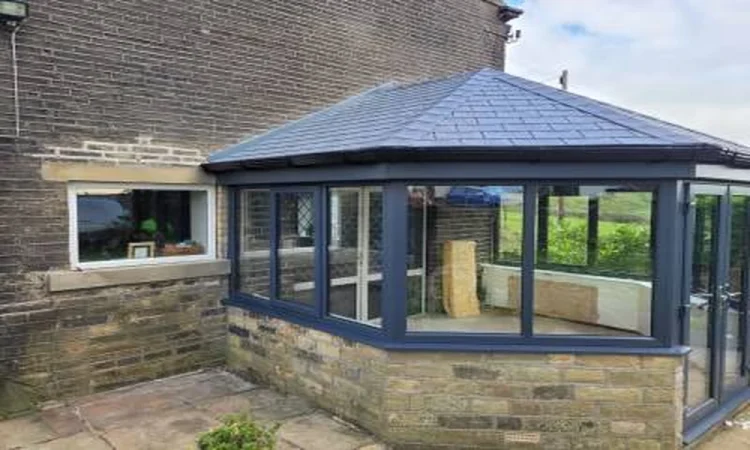
A Solid Roof Conservatory conversion replaces the original roofing system with a modern insulated structure.
This can help make the room more comfortable while creating an interior appearance closer to a conventional extension.
An Insulated Conservatory Roof solution may also be worth exploring, particularly where improving thermal performance is a priority.
It’s important to understand what each installation includes and whether the existing structure is suitable.
A professional survey can help identify the most appropriate approach.
Practical Ways to Manage Moisture
Before making major changes, there are several straightforward measures worth considering.
Opening windows or suitable ventilation points can help remove moisture-laden air, particularly after activities that increase humidity.
Avoiding indoor clothes drying, checking for leaking seals and maintaining a sensible temperature can also help.
A dehumidifier may provide temporary assistance, although it shouldn’t be treated as a substitute for resolving structural problems.
If moisture appears after rainfall rather than during temperature changes, the issue could be water ingress rather than condensation.
In that situation, the roof should be inspected for leaks.
A More Comfortable Conservatory Starts with the Right Advice
Persistent condensation doesn’t necessarily mean the whole conservatory needs replacing.
Sometimes, improved ventilation and everyday adjustments are enough. In other cases, upgrading an older, poorly insulated roof may offer a more lasting improvement.
Conservatory Roof Specialists helps homeowners assess their existing conservatories and explore suitable replacement roofing systems.
With the right combination of insulation, ventilation and professional installation, an uncomfortable conservatory can become a much more practical part of everyday home life.
For more information, visit Conservatory Roof Specialists or request a quotation to discuss the options available for your property.