

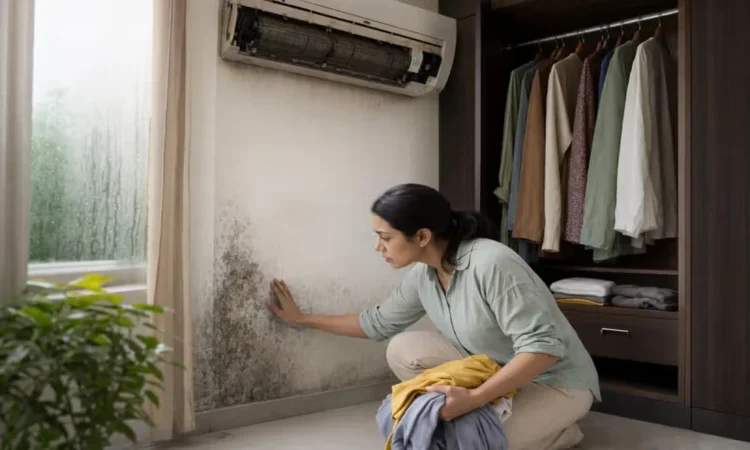
A recurring musty smell deserves a description of when it appears and an appropriate investigation, rather than another attempt to cover it. Odour alone cannot diagnose the cause or establish what equipment is needed. In a Newmarket home, a useful response is to record the pattern, flag any visible concerns and ask a qualified person to help determine what the room actually requires.
Describe the recurrence without diagnosing it
Begin with the observation in plain language. Identify the room, when the smell was first noticed and whether it seems continuous or intermittent. State what you know about recent events, such as a reported plumbing problem or a change in room use. Keep guesses clearly labelled. A phrase such as “noticed after returning from a weekend away” is more useful than declaring a hidden defect that has not been assessed.
Record safely visible changes without opening walls, disturbing suspect materials or entering an unsafe area. A new stain or a known leak is relevant information to pass to the appropriate professional. Electrical concerns, active water or suspected contamination call for qualified help. A household should not turn an odour investigation into a demolition exercise just to provide a more dramatic photograph for an initial enquiry.
Health Canada’s guidance on indoor moisture and mould supports addressing moisture sources. That broad principle is useful here without treating every smell as proof of mould. The right assessment considers the actual building and conditions. A description of the recurrence helps that process begin with observations instead of a conclusion chosen in advance.
If the room is shared, ask other occupants what they noticed without leading them toward one explanation. One person may have first noticed the issue near a stored item; another may remember an earlier leak. Put those accounts in sequence and retain uncertainty where memories differ. A short chronology is more credible and useful than combining several recollections into a confident story no one can fully support.
Keep a comfortable smell out of the evidence column
A room smelling different after a scented product is used tells the household that its perception has changed. It does not explain whether an underlying moisture concern has changed. Keep those events separate in the record. If fragrance has been used, tell the person assessing the room. There is no need to hide an ordinary housekeeping choice, but it should not be mistaken for evidence that the original issue has been resolved.
The same care applies to visual tidiness. Clearing clutter may improve access and make a room easier to inspect, but it is not a finding about concealed conditions. Only move ordinary contents where safe and appropriate, and seek advice when items themselves may be affected. The household’s preparation should support the assessment without disturbing the evidence or exposing someone to an uncertain material hazard.
Avoid making the next visit a performance of freshness. It can be tempting to clean, perfume and rearrange everything immediately before a professional arrives. Explain what has already been done and ask what preparation is appropriate. The person assessing the concern may need a clear account of its ordinary conditions. Honest context is more valuable than a room arranged to suggest that the problem was never significant.
Discuss equipment only after its purpose is clear
If the assessment identifies a defined temporary moisture-control need, ask what role equipment would play and who will evaluate the result. A dehumidifier enquiry should describe that purpose and the room’s relevant conditions. Renting a machine merely to make the smell less noticeable can leave the original question unanswered. The equipment decision is strongest when it follows the assessment and has a stated objective.
Drying Equipment’s Newmarket dehumidifier information offers a local starting point for that rental discussion. Confirm the actual unit, suitability and service arrangements with the provider and the person directing the work. The existence of a regional service page does not determine what the property needs, how long the hire should last or whether a separate specialist is required.
Be explicit about responsibilities during the hire. Someone should receive the instructions, know the provider’s contact route and understand what changes must be reported to the person managing the issue. Follow the actual machine documentation and competent advice for the site. Do not improvise electrical or drainage arrangements from a photograph, or treat a machine running in the room as proof that every material concern has been addressed.
Make the next visit more informative
Keep the record going through the agreed assessment or temporary-control period. Note relevant events and professional recommendations, including what work was actually completed. If the smell recurs, describe the recurrence in relation to those events. “It returned after the repair and equipment collection” is a different starting point from “it sometimes smells,” provided the dates and sequence are accurate.
Ask the responsible professional what follow-up information would be useful. They may need a particular observation or a further visit; the homeowner should not invent a monitoring programme independently. Retain their explanation of what has been resolved and what remains uncertain. This gives the household a practical route forward without assuming that one visit must produce a complete answer to every possible source.
Before the next appointment, leave the evaluator a concise history of the room as it has been experienced. The most helpful preparation may be an honest note on recurrence, a relevant photograph and a clear account of previous work. A freshly masked smell cannot offer that context. Let the investigation guide the response, so that improved comfort is connected to an understood problem rather than merely a more appealing fragrance.