

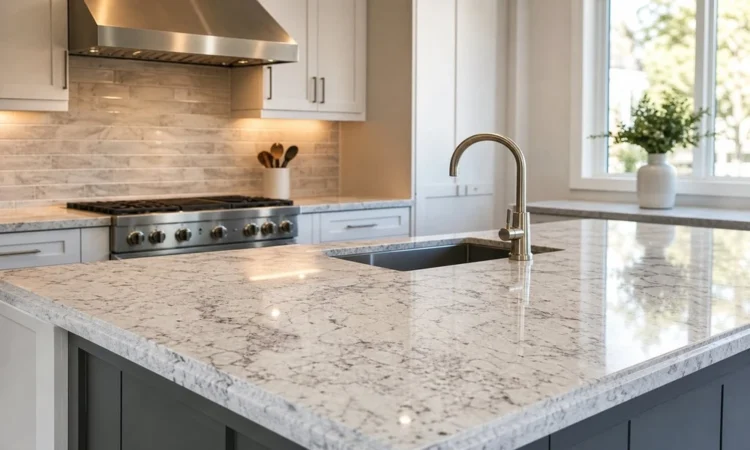
New countertops are among the easiest ways to update a kitchen, which is one of the reasons homeowners in Davie and the Pine Island Ridge area give them so much consideration during remodels.
Match the Material to Daily Use
- Quartz is a popular choice for kitchens. Engineered for consistency and low-maintenance performance, quartz offers tight patterns that are an asset when coordinating with other design elements in the room. Stain-resistant quartz is easy to keep looking its best, but the material is less tolerant of excessive, direct heat.
- Granite is another durable and low-maintenance countertop material. It is a natural stone that shows movement and color variations from slab to slab, which may appeal to homeowners who want to bring a more organic element into the room. Some granites need periodic sealing.
- Marble’s softer patterns lend a classic, refined look to kitchens. Homeowners should be comfortable with a material that is more porous and subject to etching and staining. Some people actually like that aspect of marble. The stone ages gracefully.
- Porcelain is a strong, hard-wearing countertop material that holds up well to heat. Porcelain is available in a range of colors and patterns. Homeowners can choose looks that mimic stone, concrete, wood, and other aesthetics. The material is brittle during fabrication. Contractors who regularly fabricate porcelain have the tools and techniques needed to achieve accurate cuts.
- Solid surface can achieve a nearly seamless appearance. It also can be repaired, but it doesn’t perform as well when exposed to heat.
Think about your habits and maintenance expectations to determine the most suitable countertop material for your home. Consider edge profiles, too. Squared edges have a crisper, more contemporary look, but rounded edges are forgiving in busy households. Thicker-looking edges give islands presence without the expense of thicker countertops everywhere.
Prepare the Kitchen Before Installation
Replacing a countertop can be a multi-step process. Measurements are taken, the new slab(s) is reviewed for placement, the countertop is fabricated, the current countertops are removed, and then the new countertops are brought into your kitchen and installed.
Plan on clearing countertops of appliances and other items. You might consider removing décor on walls immediately adjacent to the kitchen, too. Demolition can create dust and vibrations. If the sink will be removed along with the current countertops, think about whether you’ll need an alternate water source during the process.
Skip this if you are only replacing a small bathroom vanity top.
Ask for an Itemized Installation Estimate
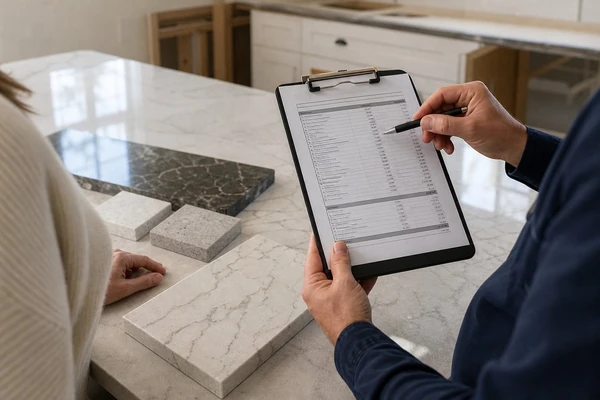
Countertop installation measurements
With an accurate description of your countertop project, a Davie contractor can prepare a thorough estimate – more on countertop contractor near pine island ridge if you want that route. Get a handle on what can affect material pricing: slab availability, edge profiles, finishes, thicknesses, pattern direction, etc. Complex patterns may be difficult to match at seams, so you may pay a premium for rare colors. Pricing can vary for honed or leathered finishes. Countertop cutouts for sinks or cooktops can add to the cost.
For the installation itself, pricing can be affected by the size and shape of countertops, number of seams, availability of the home for installation, etc. Waterfall edges or large islands might be more labor-intensive, especially if seating is planned, which can affect cabinet support needs.
A good countertop estimate addresses the following:
- Cost to remove and dispose of existing countertops
- Sink cutout cost, sink replacement if necessary
- Post-measurement timeline
- Cost of electrical/plumbing work, including reconnecting sinks
- Edge profile cost
- Additional support needed to achieve desired overhangs
Straightforward countertop projects, such as removing and replacing a single-slab countertop without a sink cutout, won’t require as much itemization as larger kitchen updates. But homeowners should feel comfortable with the estimate’s level of detail, have an idea of the final look, and understand the process.
Review Slabs and Cabinets Before Fabrication
Contractors who provide reviews before cutting new slabs enable homeowners to catch errors and clarify questions. Seeing the new countertops in person provides an opportunity to evaluate colors and patterns in your home’s lighting. Questions of pattern direction and matching at seams can be answered. Sink locations can be marked, backsplash connections can be reviewed since backsplashes are often installed after countertops, and edge profiles can be revisited.
Reviewing the new countertop is the last chance to make adjustments before slabs are committed to a particular look. Bringing in other design elements for comparison helps identify undertone discrepancies. Countertop, backsplash, and flooring samples that match in the showroom might not necessarily look right together in a kitchen.
Cabinets provide the foundation for countertops. If they are structurally compromised, countertops can perform differently once installed. Cabinets that are loose, uneven, or water-damaged (especially below sinks) should be repaired or replaced before new countertops are measured. Contractors who measure for new countertops should point out any problem areas. Minor adjustments can impact countertop sizes.
Countertops aren’t measured by cabinet footprint alone – if you want the source, it’s www.en.wikipedia.org/wiki/Countertop. Sink locations, cooktops, electrical outlets, and other factors are considered. Walls aren’t necessarily straight or level, so minor adjustments in walls, appliances, etc., can affect countertop sizes. Reviewing backsplash connections and extended seating areas can impact countertop overhangs and cabinet support, respectively.